Phase 2: The 26.04 LTS Upgrade Dilemma & Shifting to Kubuntu
Phase 2: The 26.04 LTS Upgrade Dilemma & Shifting to Kubuntu
The Package Parity Problem
With the arrival of April and the release of the new Ubuntu Long-Term Support (LTS) cycle (26.04), a significant configuration dilemma emerged. A firm operational rule established over years of distro-hopping is that the latest LTS represents the perfect "Goldilocks zone"—the optimal balance between modern software technologies and system stability. In contrast, rolling releases like Arch Linux felt too volatile and unpredictable.
At the time, the virtual machines were running Ubuntu proper, while the host servers ran Linux Mint. When the Mint development team announced they would wait until Christmas to update their base, it introduced a conflict:
- Upgrading the VMs immediately would break package version parity with the hosts for months.
- Delaying the VM upgrades until Christmas would mean dealing with old, stagnant repositories.
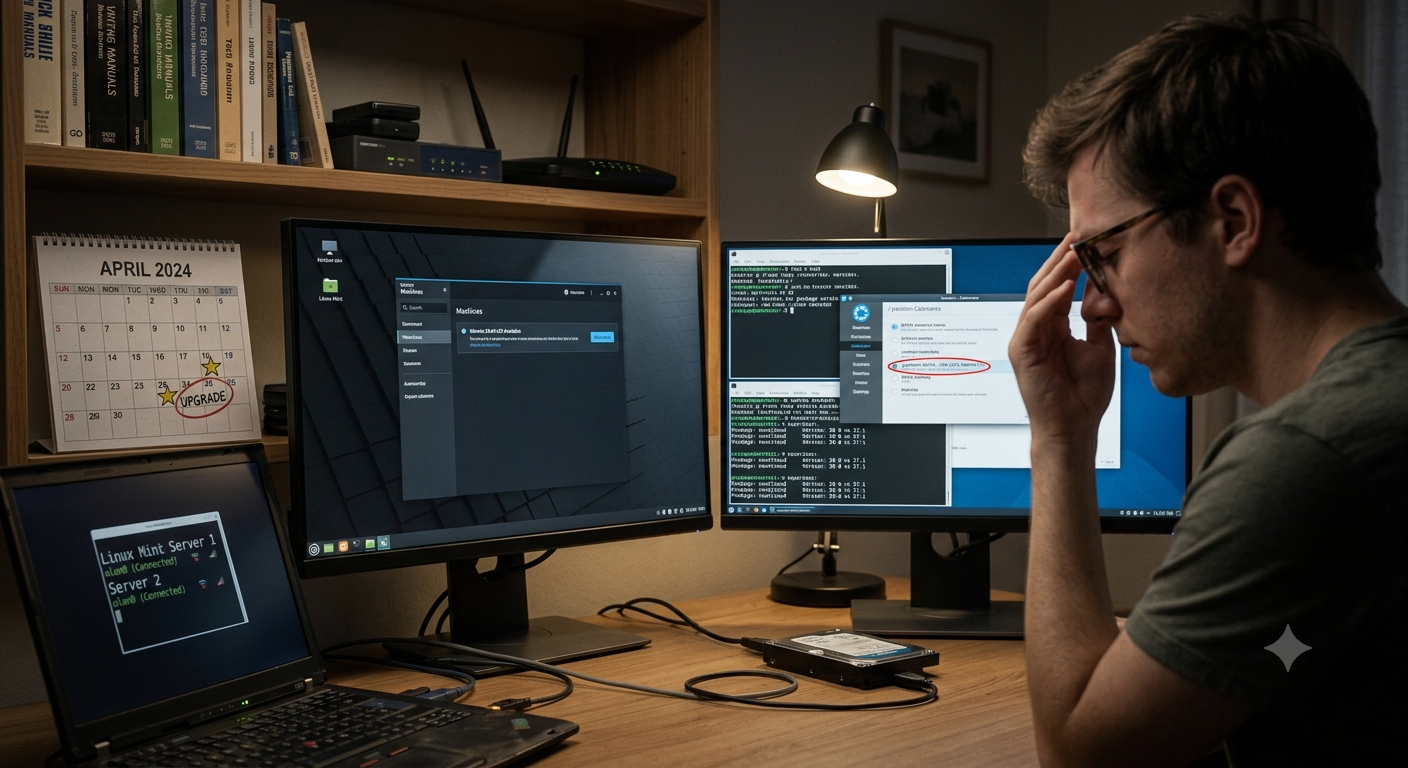
To maintain strict version parity and predictability across both host environments and virtual instances, the decision was made to wipe the host servers and migrate them to an Ubuntu-based system.
Backup & The Installer Showdown
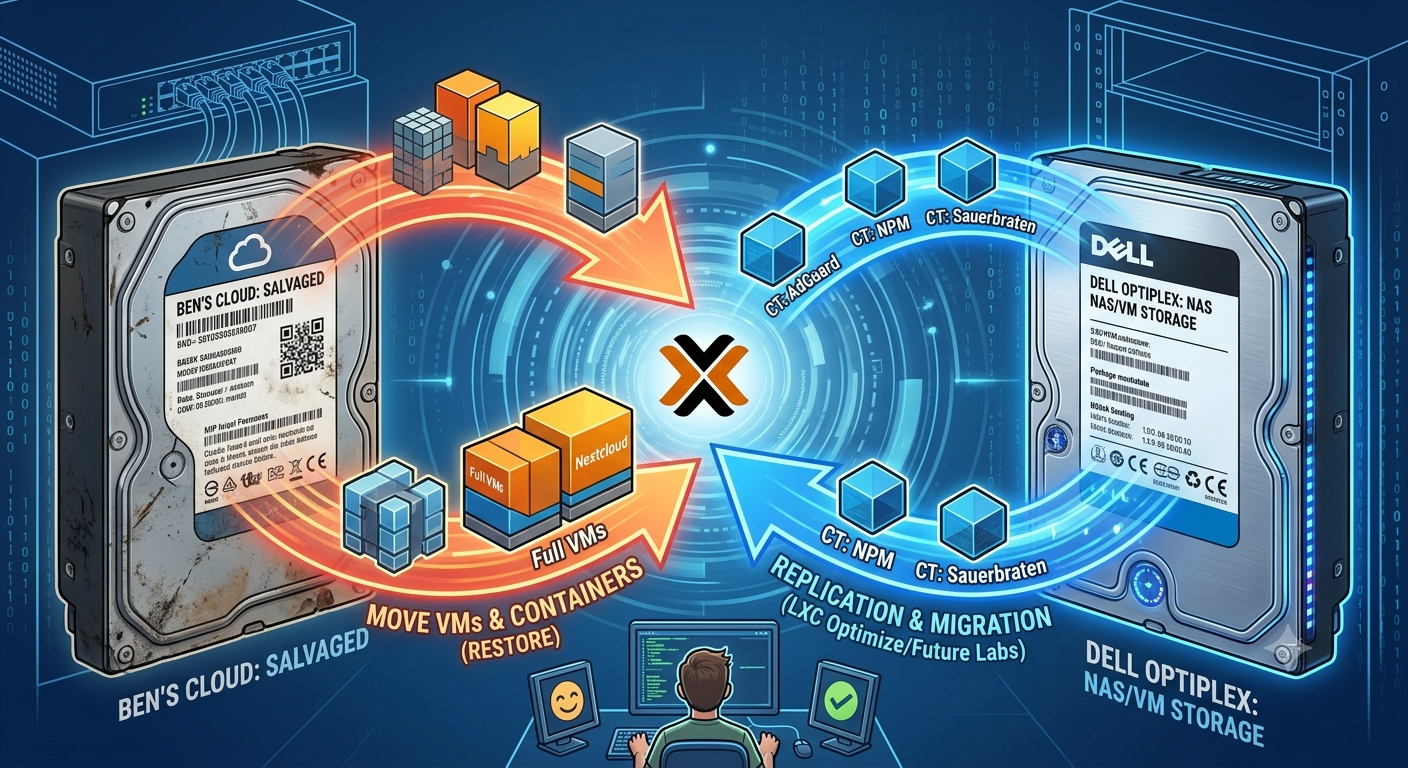
Before wiping the systems, all active VMs, Docker files, and storage volumes were cloned and securely copied to an external backup hard drive.
During the host OS reinstallation process, two distinct Ubuntu flavors were evaluated:
1. Kubuntu (KDE Plasma)
Initially installed to test out the highly praised KDE desktop environment before moving to GNOME.
- Pros: The installer (Calamares-based) was exceptionally user-friendly. It offered essential utilities like
virt-managernatively during installation and allowed changing the root directory (/) to BTRFS with a single click, enabling seamless system snapshots via Timeshift. - Outcome: The environment proved surprisingly stable and did not break as expected.
2. Ubuntu Proper (GNOME)
An attempt was made to overwrite Kubuntu to evaluate the default GNOME experience, but the installation was halted due to installer limitations.
- Cons: Ubuntu proper uses the new Flutter-based installer. Unlike Kubuntu, it lacked a simple toggle to format the root partition as BTRFS. Manual partitioning logic that previously worked on Mint resulted in duplicate partition anomalies.
Ultimately, the choice was made to stick with Kubuntu across both workstations and servers. Backed-up virtual machines and Docker containers were restored to the new hosts, clicking right back into place without friction.