Phase 3: The Ultimate Proxmox Migration & Resource Optimization
Phase 3: The Ultimate Proxmox Migration & Resource Optimization
Transitioning to a Wired Network
Following a physical relocation to a new living space, the environmental constraints of the past were completely removed: the host servers could finally be wired into a physical local network via Ethernet. This milestone opened up the possibility of deploying a dedicated hypervisor environment that was previously out of reach.
Around this time, the older Thinkpad laptop server reached the end of its operational lifecycle due to hardware age and compounding issues. However, its storage SSD remained fully functional. Using the salvaged data and combining virtual machines from both previous nodes, a fresh Proxmox VE hypervisor was deployed on the remaining server node. All existing VMs were successfully imported into Proxmox following standard migration guidelines.
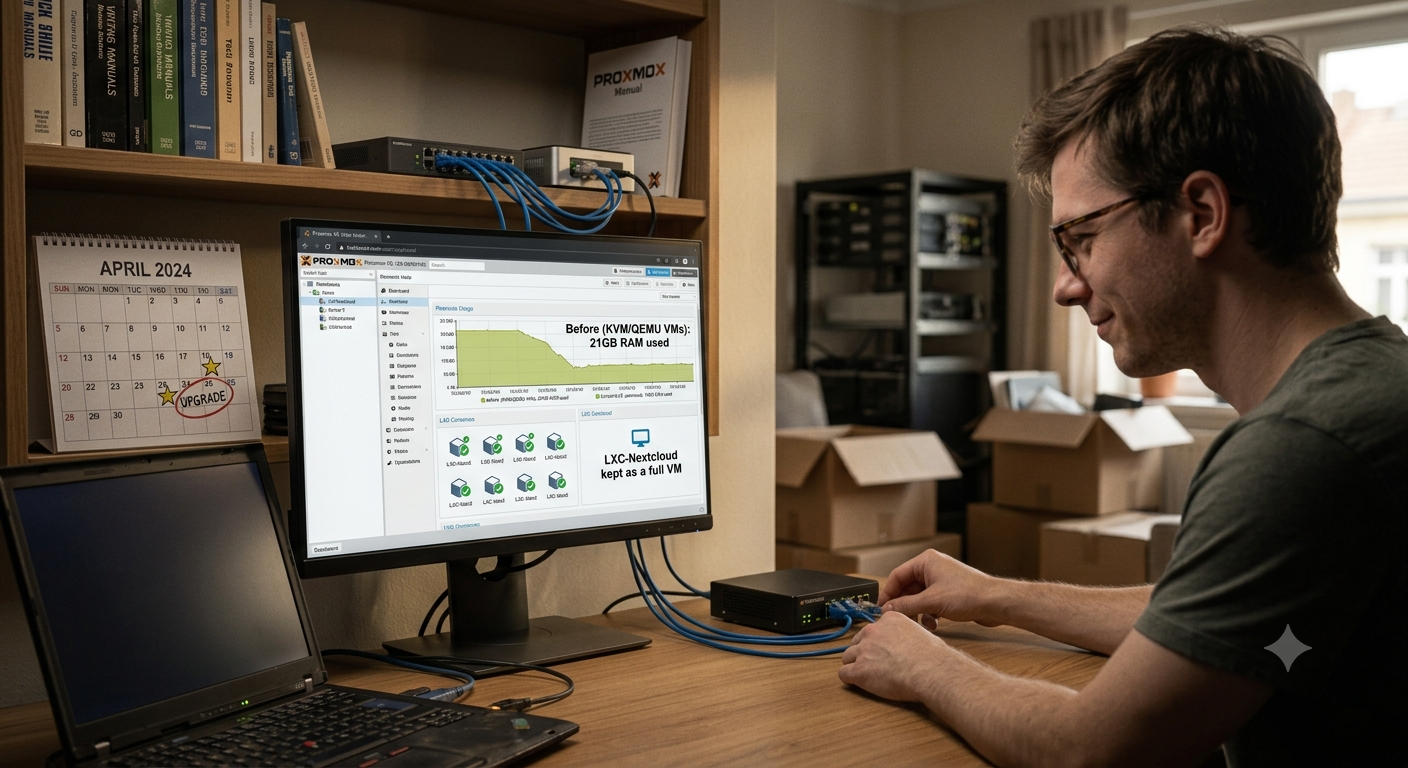
Optimizing Resources: Full VMs vs. LXC Containers
While the newly imported virtual machines functioned flawlessly, monitoring tools revealed they were drawing significantly more RAM on Proxmox than they had under the previous KVM/QEMU setup.
To optimize efficiency, Proxmox's native LXC (Linux Containers) technology was leveraged:
- Core services were methodically migrated out of bulky, full-sized virtual machines and converted into lightweight LXC containers.
- Nextcloud was kept as a dedicated full virtual machine due to its unique operational requirements, complex volume management, and internal architectural preferences.
Architectural Impact & Future Lab Plans
This consolidation strategy resulted in massive performance and resource gains, reducing overall baseline memory consumption from over 21 GB of RAM down to just over 10 GB.
By slashing RAM usage by more than half, significant compute overhead was freed up on the remaining node. This extra capacity now allows for risk-free experimentation with enterprise-grade distributions—such as Red Hat Enterprise Linux (RHEL) via a free developer account, openSUSE, and other advanced networking topologies.
Dealing with the previous Wi-Fi restrictions provided invaluable experience in working around inconvenient infrastructure constraints, but the transition to Proxmox represents a definitive and permanent upgrade.